Stay up to date with investments by contacting us online or by meeting us in person.
Dubai’s Golden Key for Europeans
Where European Expertise Meets Unmatched Real Estate Growth & Security
“Never build your portfolio on a single market – the real safety lies in diversification. Dubai is not just an investment, it is a strategic point on the map of your global future.”
Rasheda Al Mazrouei
Executive Snapshot
1.1 What This Study Will Show You
This study is designed for individuals and institutional investors evaluating real estate opportunities in Dubai. Whether you are an experienced property buyer or exploring international markets for the first time, the aim of this report is to provide an evidence-based, transparent overview of Dubai’s real estate landscape as of 2025.
Rather than offering promotional claims, this document presents a balanced and structured perspective on the potential, limitations, and critical success factors for investing in Dubai today. It answers core questions such as: You will find answers to the following:
• What are the real returns (yields and appreciation) investors can expect today in Dubai?
• How does Dubai compare to traditional markets like Budapest, Benidorm, the Frecnh Riviera, or emerging ones like Croatia?
• Can you legally own property in Dubai as a foreigner, and what protections exist?
• Is it safe to move capital in and out, and what’s the tax impact on your income or profit?
• What are the risks? Is Dubai overhyped, or are current trends backed by fundamentals?
• What does timing look like? Are we early, late, or right on time?
We’ll provide:
• Historical and current market data
• Transparent comparisons with EU markets
• Real-life case studies from international investors
• Legal, tax, and exit strategy information
• A breakdown of where the market is headed in 2025–2030
The content includes market data, pricing trends, tax and legal context, case comparisons with relevant EU destinations, and an evaluation of short- and medium-term growth potential. The goal is not to persuade but to equip — providing the reader with clear, actionable insights to make a confident decision.
1.2 Why Dubai, Why Now
In 2025, Dubai is no longer an experimental frontier for real estate investors. It is an increasingly stable, regulated, and strategically positioned global city with a highlycompetitive offering in both residential and income-generating real estate. At a time when many mature European property markets are facing price stagnation, rental regulation, or tax increases, Dubai stands out as a location with rising demand, accessible entry points, and investor-centric policies.
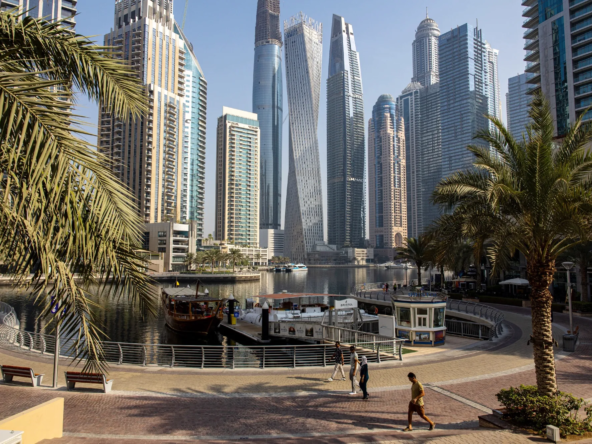
Rental yields in Dubai remain among the highest in developed markets, with average gross yields ranging from 6 to 10 percent depending on the district and rental strategy. For those investing in short-term lettings, particularly in tourist-driven areas such as Dubai Marina, Jumeirah Beach Residence, and Palm Jumeirah, yields can exceed double digits, supported by high occupancy rates and a year-round demand cycle.
Another defining factor is taxation. The UAE offers one of the most favorable tax environments in the world for real estate investors. There is no personal income tax, nocapital gains tax, no property tax, and no inheritance tax. By contrast, markets such as France, Austria, or Spain impose significant annual and transactional burdens on both residents and non-residents.
Dubai also benefits from a low barrier to entry compared to traditional luxury destinations. The average price per square meter remains below €3,200 — significantly less than property values in locations such as Vienna, Zurich, the French Riviera, or Croatian coastal cities like Dubrovnik or Split. Investors can acquire well-positioned, fully owned properties in premium zones at a fraction of the cost of a similar asset in Western or Central Europe.
Demographically, Dubai is experiencing sustained population growth, driven by international migration, corporate relocation, and tourism. The city welcomed over 17million international visitors in 2024, and population projections estimate a rise from 3.6million in 2024 to nearly 6 million by 2040. This continued influx supports a resilient rental market and a stable resale environment.
From a regulatory perspective, Dubai has matured into a globally competitive real estate jurisdiction. Foreigners can own freehold properties outright in numerous districts. Purchases are registered by the Dubai Land Department, and off-plan transactions are held in escrow as mandated by law. The Real Estate Regulatory Authority (RERA) oversees compliance and protects buyers’ rights. In addition, residency visas are available to property investors, starting from investment thresholds as low as AED 750,000(approximately €190,000).
These factors, combined with long-term infrastructure planning under the Dubai 2040 Urban Master Plan, contribute to an environment where real estate assets are not only protected but positioned for growth. Investors entering the market now are participating in a city still in the early stages of global financial integration — one that is already outperforming legacy markets in terms of return, cost-efficiency, and legal transparency.
1.3 Key Numbers at a Glance (Yields, Prices, Growth)
The following data highlights the comparative investment case for Dubai, with a focus on property values, yields, and capital appreciation. Data points reflect averages from reputable sources, current as of Q1 2025:
Getting to know the market
Click to go to the part you are interested in
Connect with the Experts
Ready to take the next step in your investment journey? Reach out, and let’s make it happen together.
East Gate Intelligence
Your trusted source for data, analysis, and strategies that drive smarter investments.